

 English
 Português
 Español
 عربى
عربى
Frameless Wiper Blade
-
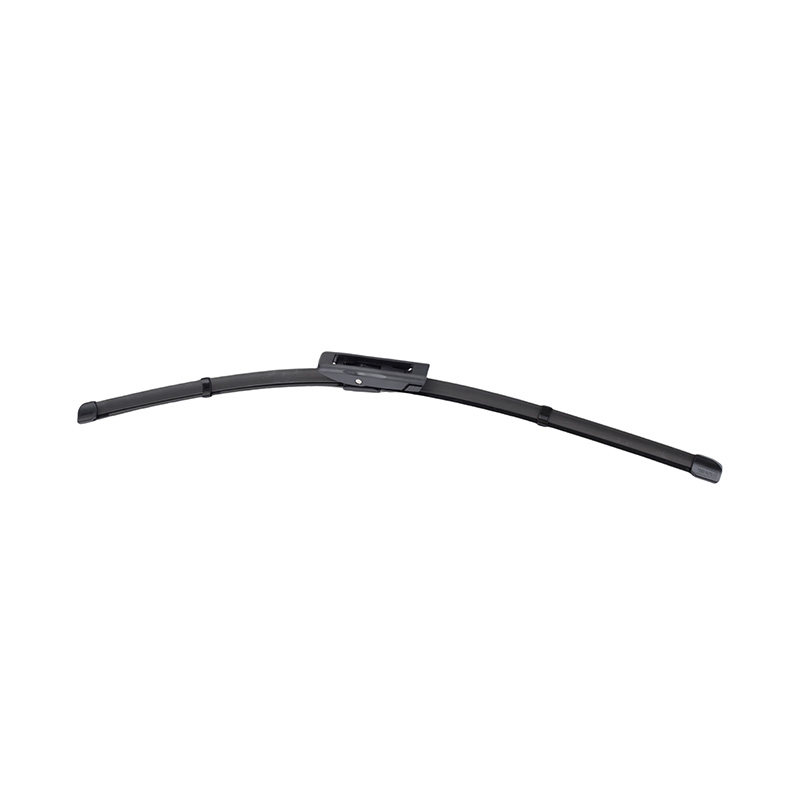 MC-SOWB-9 for Renault Frameless Wiper Blade
-
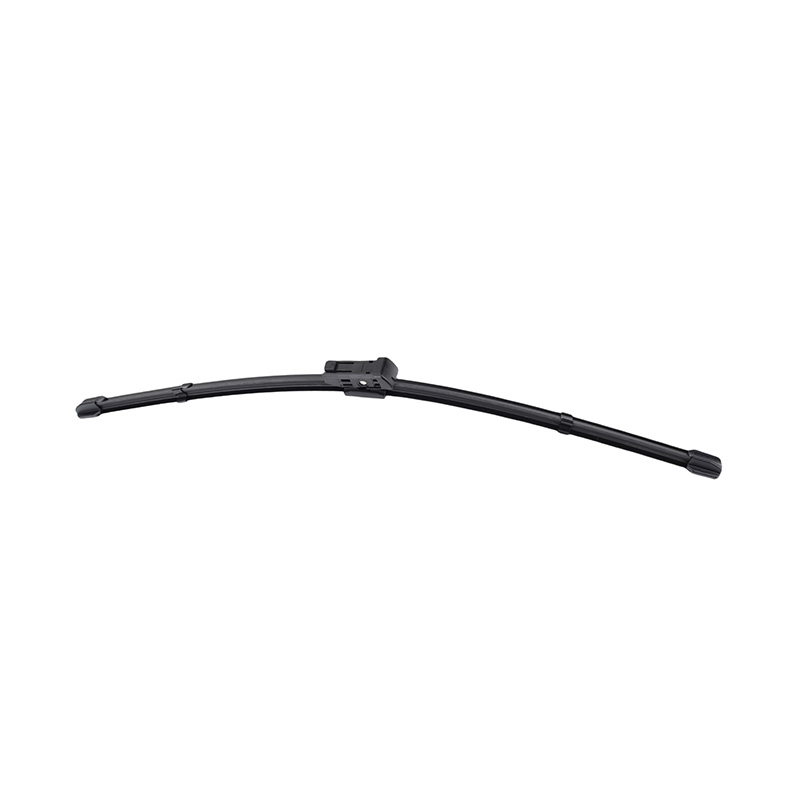 MC-SOWB-10 for Audi A4L Frameless Wiper Blade
-
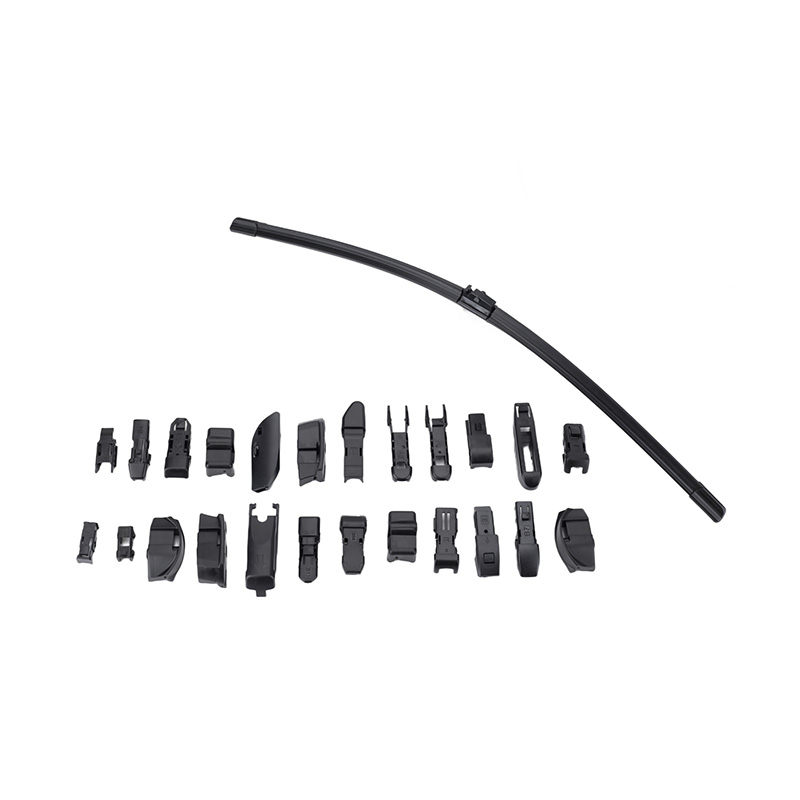 MC-SOWB-12 for Multi-function Wiper 1 Frameless Wiper Blade
-
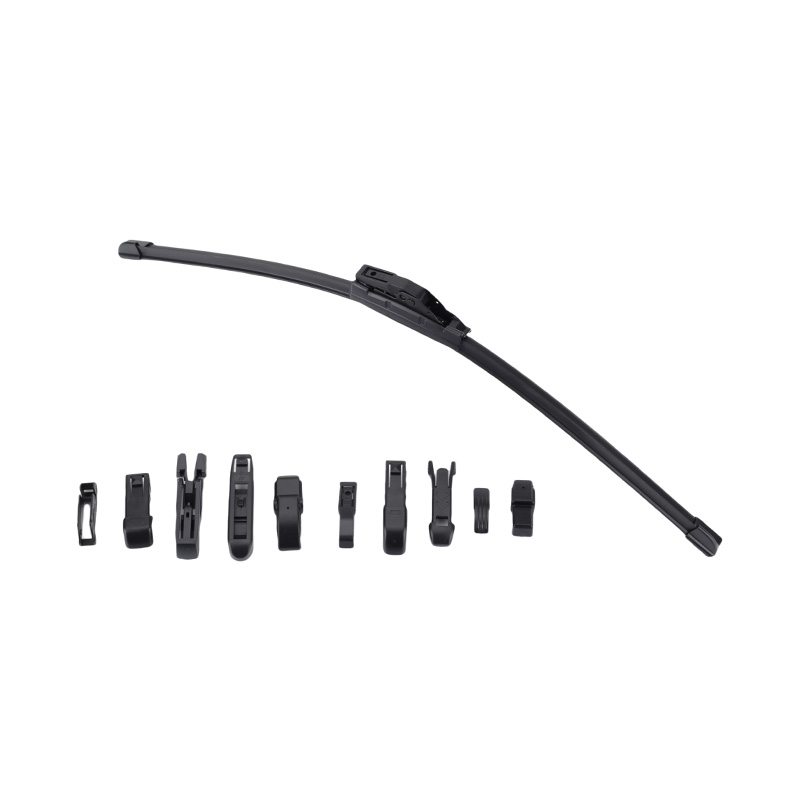 MC-SOWB-13 for Multi-function Wiper 2 Frameless Wiper Blade
These frameless wiper blades abandon the traditional skeletal structure in favor of a one-piece, streamlined design. Featuring an internal high-elasticity steel strip, they apply uniform pressure to conform perfectly to the curvature of the windshield, ensuring a wipe free of blind spots, water streaks, or chatter. Crafted from high-quality, wear-resistant rubber, the blades undergo specialized treatments for anti-aging, noise reduction, and corrosion resistance. They deliver a silent, smooth wipe that does not scratch the glass, while withstanding extreme temperatures, rain, snow, and dust to perform reliably in all types of challenging weather conditions.
With significantly reduced aerodynamic drag, the blades resist lift-off at high speeds, ensuring a clear field of vision and substantially enhancing driving safety. The design is compatible with the vast majority of passenger cars, SUVs, and commercial vehicles currently on the market, offering both simple installation and convenient replacement. Manufactured through standardized, precision-engineered factory processes—and subject to rigorous multi-stage quality control—these blades are available in a wide range of specifications. They are ideally suited to meet the demands of bulk purchasing, export supply, and custom orders, standing as a durable, high-value accessory for automotive cleaning.

-
0 years
Industry Experience
-
0 m²
Factory Area
-
0 +
Compatible Car Models
-
0 +
Export Regions


Frameless Wiper Blades: Design, Performance and Selection Guide
Frameless wiper blades take a more modern approach by replacing the old exposed metal frame with a single integrated flexible structure. You will also hear them called beam wiper blades or flat wiper blades, though the exact name can differ from one manufacturer or market to another.
Rather than relying on several external metal pressure points, these blades usually rely on an internal spring-steel strip that spreads force evenly along the rubber edge. The result is a blade that follows the curve of the windshield more closely and keeps consistent contact across the full wipe path.
They are now common on passenger cars, SUVs, electric vehicles and many commercial vehicles. A range of lengths, mounting systems and vehicle-specific versions is available so the blades can match different windshield shapes and wiper-arm designs.
What Is a Frameless Wiper Blade?
A frameless wiper blade is a windshield wiper that does away with the familiar external metal frame used on conventional blades. Instead, its support comes from flexible internal components built directly into the blade body.
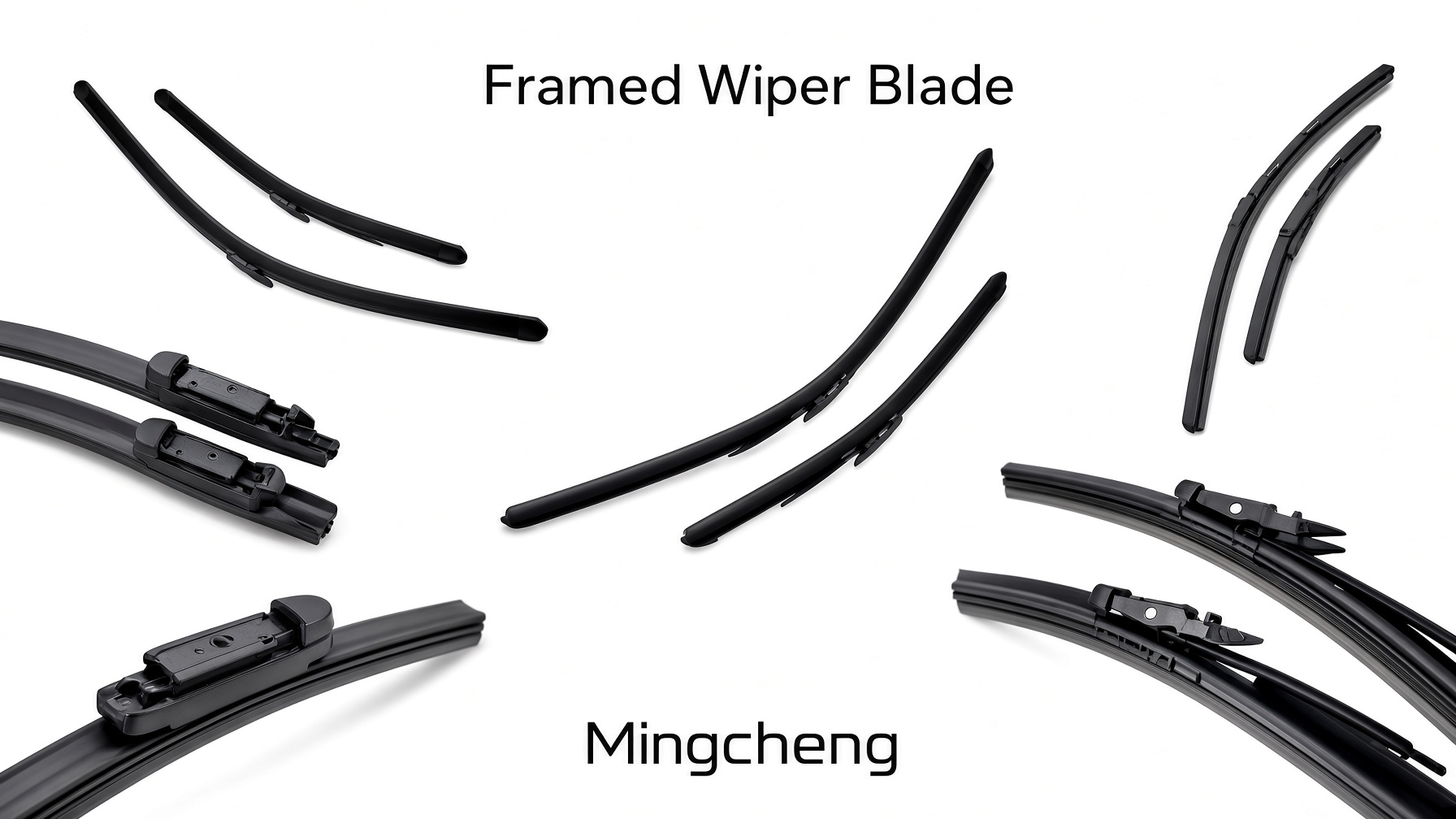
The goal of this layout is simple: take the force from the wiper arm and spread it evenly along the rubber edge so the blade can follow the shape of the glass more naturally.
You will usually see these blades referred to by several related names:
- Beam wiper blade
- Flat wiper blade
- Frameless windshield wiper
- Aerodynamic wiper blade
While the terms point to the same general idea, actual products can still differ in their internal construction, the connector they use, the rubber compound, and the shape of the aerodynamic profile.
Are Frameless, Beam and Flat Wiper Blades the Same?
Frameless, beam and flat wiper blades all point to the same general family of products, yet they are not automatically the same specification.
Manufacturers often use the three names in slightly different ways. What really matters is the actual construction: the internal spring element, the shape of the rubber, the connector type, the overall length and the vehicle the blade is meant for.
When the job is vehicle-specific, the correct fitment details always outweigh the marketing name on the packaging.
Frameless Wiper Blade Structure and Main Components
A frameless wiper blade relies on a handful of carefully matched parts that keep the rubber in steady contact with the glass.
- How evenly it clears the glass
- Whether it chatters or squeaks
- How completely it removes water
- How firmly it stays in contact
- How well it stands up to sun, ozone and temperature swings
How Does a Frameless Wiper Blade Work?
The working principle of a frameless wiper blade can be summed up in a straightforward sequence:
As the arm swings, the force travels through the connector and into the blade. The internal spring then spreads that force evenly along the length of the rubber. The rubber edge simply follows the arm’s motion across the glass, staying in contact as the shape of the windshield changes.
This low-profile pressure path is what keeps the blade working over both the flatter and more curved sections of the glass. Real-world results still depend on the exact blade design, the rubber compound, how curved the windshield is, the condition of the wiper arm, and the geometry of the installation.
Frameless Wiper Blade Sizes and Vehicle Applications
Frameless wiper blades come in a variety of lengths and pairings to match different vehicles.
Mingcheng’s current range includes sizes such as:
- 600 mm
- 650 mm
- 700 mm
- 450 mm
- 475 mm
- 625 mm
- 650 mm + 475 mm
- 700 mm + 450 mm
- 625 mm + 475 mm
These dimensions are linked to specific vehicle applications already in the product line.
Whatever the vehicle, the final choice should always be confirmed against the exact application requirements.
Wiper Arm Compatibility and Connector Types
Fitting a frameless wiper blade correctly means matching both the length and the mounting system to the vehicle.
The most common arm connections are:
- U-hook
- J-hook
- Push-button
- Side pin
- Bayonet
- Screw type
- Vehicle-specific connectors
Mingcheng’s current range includes universal frameless blades, dedicated U-hook versions and a selection of vehicle-specific products.
How to identify the connector
The simplest way is to look at the original blade still fitted on the car and at the tip of the wiper arm. You will usually see one of these:
- A curved hook-shaped arm
- A pin that enters from the side
- A bayonet-style slot
- A push-button release
- A screw-fixed mounting point
Always confirm the connector type before ordering a replacement. Even a perfectly sized blade will not sit properly if the connector does not match the arm.
How to Choose the Right Frameless Wiper Blade
Choosing the right frameless wiper blade is easiest when you follow a clear sequence.
- Step 1: Identify the vehicle
Note the make, model and, if possible, the model year. That information usually points straight to the correct length and mounting style. - Step 2: Check the blade length
Measure the blade already on the car or look up the manufacturer’s recommended size. Judging length by the size of the windshield alone is not reliable. - Step 3: Identify the wiper-arm type
See whether the arm uses a U-hook, J-hook, push-button, side-pin, bayonet or another style of connection. - Step 4: Match the connector or adapter
Confirm that the blade’s connector is designed for the exact arm type on the vehicle. - Step 5: Look at the windshield curvature
The blade needs to stay in contact all the way across the glass. A well-designed internal spring helps the rubber follow the curve without lifting or pressing too hard in the middle. - Step 6: Factor in climate and driving conditions
Heavy rain, snow, dust, strong sunlight and wide temperature swings all place different demands on the rubber and the rest of the blade. - Step 7: Review construction and rubber material
Check the overall frame-free design, the characteristics of the spring steel and the rubber compound so they suit the job the blade will actually do.
Frameless Wiper Blade vs. Framed Wiper Blade
Frameless and Framed Wiper Blades use different structural principles.
| Main structure | Integrated flexible structure | External metal frame |
| Pressure distribution | Internal flexible support | Multiple external pressure points |
| External profile | Low and streamlined | More visible mechanical structure |
| Aerodynamics | Streamlined profile | More exposed structure |
| Windshield conformity | Depends on internal spring design | Depends on frame geometry |
| Appearance | Modern integrated appearance | Traditional appearance |
| Applications | Many modern vehicle platforms | Broad range of vehicle platforms |
| Fitment | Vehicle-specific or universal designs | Vehicle-specific or universal designs |
The appropriate design depends on the vehicle platform, windshield curvature, wiper arm system, operating conditions and product specification.
Frameless Wiper Blade vs. Hybrid Wiper Blade
A frameless wiper blade is built around a single integrated flexible support structure that runs the full length of the blade.
A hybrid wiper blade starts with a supported internal structure and then adds an external aerodynamic cover over the top.
The practical differences show up in several places:
- How the internal structure is arranged
- Whether an outer cover is present
- The overall aerodynamic shape
- The way pressure is spread along the rubber
- The finished appearance on the windshield
- Which vehicles the blade is designed to fit
A hybrid design tries to combine solid internal support with the extra protection and smoother airflow of an outer shell. A frameless design concentrates on keeping everything inside one continuous flexible structure.
Frameless Wiper Blade Performance in Different Weather Conditions
Different weather conditions place different demands on a frameless wiper blade.
Aerodynamic Design and High-Speed Stability
One of the key characteristics of many Frameless Wiper Blades is their streamlined external profile.
A lower-profile structure can reduce exposed components and help manage airflow around the blade.
At higher speeds, aerodynamic lift can reduce the effective pressure between the blade and windshield. Blade geometry, wiper arm pressure, internal spring characteristics and vehicle airflow all influence this effect.
For this reason, high-speed wiping performance should be considered as a complete system rather than as a property of the blade alone.
Common Frameless Wiper Blade Problems and Solutions
Why does a frameless wiper blade skip?
Skipping usually comes from uneven or too little pressure, a rubber edge that has hardened with age, a blade that is the wrong size or mounting style, dirt on the glass, or a problem with the wiper arm itself. Before changing parts, check the blade length, the connector, the rubber condition and the arm.
Why does a frameless wiper blade make noise?
Chattering or squeaking is often linked to the angle of the wiper arm, the condition of the windshield, the state of the rubber, or the way the blade was installed. If the blade is not sitting square to the glass it will skip and chatter as it moves.
Why are water streaks left behind?
Streaks appear when the rubber edge loses consistent contact with the glass. Common reasons are a worn rubber lip, dirt or film on the surface, incorrect arm pressure, or a blade that is simply not the right specification for the vehicle.
Why does the blade lift at high speed?
At higher speeds the airflow can push the blade upward if the downward force is not strong enough. Arm pressure, the shape of the blade profile, the spring characteristics and the way air moves over the vehicle all play a part in keeping the blade down.
Why does the blade have uneven contact?
Uneven contact can be caused by choosing the wrong blade, a strongly curved windshield, damaged internal parts, incorrect installation, or a worn or bent wiper arm.
Frameless wiper blade manufacturing process
Producing a frameless blade involves several clear stages. A typical sequence looks like this:
The exact steps vary with the product design. On vehicle-specific blades, dimensional accuracy and the precise connector configuration are especially critical—small differences can affect both installation and long-term fit.
Why Choose Mingcheng Frameless Wiper Blades?
Ruian Mingcheng Vehicle Parts Co., Ltd. brings more than thirty years of experience in the automotive parts industry. The company combines research and development, manufacturing and sales under one organisation and runs production facilities in both Ruian and Anhui. Together the two sites cover more than 23,000 square metres and support in-house mould development, precision machining and high-volume production.
The current frameless wiper-blade range includes universal designs, dedicated U-hook versions and a growing list of vehicle-specific applications. Models already covered include Volvo XC60, Tesla Model X, GAC Trumpchi GS8, Toyota Camry, Honda Accord, Peugeot, Škoda Octavia, Volkswagen Sagitar and Ford EcoSport.
OEM and ODM programmes are available for different vehicle platforms. From initial product development through component processing, assembly and final quality control, Mingcheng manages the full process needed to deliver reliable frameless wiper-blade solutions.
Frequently Asked Questions About Frameless Wiper Blades
Are Frameless and Beam Wiper Blades the Same?
They are closely related terms, but they should not automatically be treated as identical products. Manufacturers can use different terminology for similar designs, so actual construction, dimensions and fitment should be checked.
Are Frameless Wiper Blades Better Than Framed Wiper Blades?
Neither design is universally better. Frameless and framed blades use different structural systems and can suit different vehicle platforms, windshield shapes and operating requirements.
What Sizes Do Frameless Wiper Blades Come In?
Available sizes vary by application. The current Mingcheng range includes 450mm, 475mm, 600mm, 625mm, 650mm and 700mm examples, including paired sizes for specific vehicle applications.
What Wiper Arm Types Are Compatible with Frameless Wiper Blades?
Compatibility depends on the specific product. Common systems include U-Hook, J-Hook, Push Button, Side Pin, Bayonet and vehicle-specific mounting designs.
How Do I Identify a Wiper Blade Connector?
Inspect the attachment point between the original blade and wiper arm. The shape of the arm and mounting mechanism can indicate whether the vehicle uses a hook, pin, bayonet, push-button or another connector.
Are Frameless Wiper Blades Suitable for SUVs?
Yes. Frameless Wiper Blades are used on many SUV applications. The correct blade length and mounting configuration should be confirmed for the specific vehicle.
Are Frameless Wiper Blades Suitable for Electric Vehicles?
Yes. Frameless Wiper Blades can be designed for electric vehicle applications. The current Mingcheng range includes a Tesla Model X application.
Why Do Frameless Wiper Blades Work Well at High Speeds?
Their streamlined profile can reduce exposed mechanical components and manage airflow around the blade. High-speed stability also depends on wiper arm pressure, spring characteristics, blade geometry and windshield conditions.
Why Does a Frameless Wiper Blade Skip?
Skipping can be caused by worn rubber, incorrect pressure, poor windshield condition, improper installation, incorrect fitment or a problem with the wiper arm.
Why Does a Frameless Wiper Blade Make Noise?
Noise can result from the installation angle, windshield contamination, rubber condition, wiper arm alignment or uneven contact with the glass.
What Materials Are Used in Frameless Wiper Blades?
Typical components include spring steel or flexible steel elements and a rubber wiping element. Additional materials and surface treatments vary by product design and manufacturer.
How Are Frameless Wiper Blades Manufactured?
Production can include spring steel processing, rubber processing, component preparation, assembly, connector installation, dimensional inspection and performance verification. The exact process depends on the product structure.
How Can I Find a Reliable Frameless Wiper Blade Manufacturer?
Look for proven manufacturing experience, stable product quality, accurate fitment, and flexible OEM/ODM capabilities. Mingcheng, with over 30 years of wiper manufacturing experience, provides Frameless Wiper Blades for various vehicle applications with multiple sizes and connector options.
-
 Zhaopingyang Industrial Zone, Tangxia Town, Ruian City, Zhejiang Province, China
-
 mcwiper@aliyun.com
mcwipernancy18@163.com -
 +86-15967718996
+86-17681527502
+86-13780132799 -
 +86-13780132799
+86-15267786072
Our team will respond to your product inquiries, fitment requests, and cooperation needs as soon as possible.
Copyright© Ruian Mingcheng Vehicle Parts Co., Ltd. All Rights Reserved.
 Flat Wiper Blades Factory