English
 Português
 Español
 عربى
عربىA windshield wiper may look like a simple automotive product. It has a visible blade, a supporting structure, and a connection that allows it to work with a vehicle's wiping system. Yet producing a reliable wiper involves more than putting several parts together.
For buyers, distributors, automotive businesses, and other industry participants, choosing a Windshield Wiper Factory is therefore not simply about finding a company that can make wipers. The more useful question is how well the factory can understand product requirements, manage production, maintain consistency, and communicate throughout the supply process.
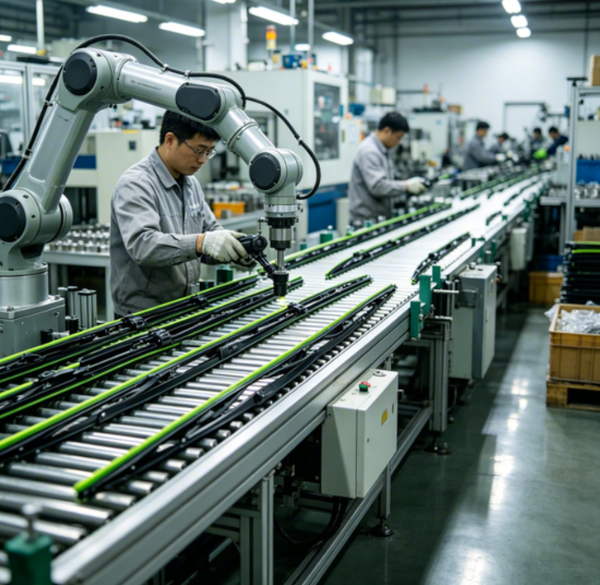
A factory may have suitable production capabilities, but that does not automatically mean it is suitable for every project. Different buyers may have different vehicle applications, product designs, packaging needs, and ordering plans.
Looking at several practical factors can make the selection process clearer.
What Should You Know About a Windshield Wiper Factory Before Choosing One?
The factory's role goes beyond physical production. It can influence how a product moves from an idea or requirement to a finished wiper.
A buyer may already know the type of product needed. Another buyer may need help organizing several product variations. Some projects may involve an existing design, while others may require adjustments to suit a particular application.
This makes communication an important part of the relationship.
Before making a decision, buyers can look at areas such as:
- Production capability
- Product range
- Material selection
- Quality control
- Customization support
- Production consistency
- Order communication
- Packaging and labeling
- Sample handling
- After-sales communication
These factors should be considered together.
For example, a factory may offer a wide product range but have limited flexibility for custom requests. Another may support customization but have a production process that does not match the buyer's needs.
The right choice depends on the actual project.
| Factor | Why It Matters |
| Production capability | Shows whether the factory can handle the type of wiper required |
| Product range | Indicates experience with different applications |
| Material management | Affects product consistency and production stability |
| Quality control | Helps identify problems during production |
| Customization | Useful when standard products do not meet a specific requirement |
| Communication | Keeps product and order information clear |
| Sample support | Allows buyers to review a product before larger orders |
| Packaging | Helps protect and organize finished products |
A factory should be evaluated as a production partner rather than simply as a source of products.
How Important Is Production Capability When Choosing a Wiper Factory?
Production capability is one of the practical areas to examine.
The word "capability" does not simply mean how much a factory can produce. It also refers to whether its production process matches the product being requested.
Windshield wipers can have different structures and designs. Their supporting parts, wiping materials, connectors, and overall appearance may vary. A factory that understands these differences may be better prepared to handle different product requirements.
Buyers can ask how the factory organizes production from incoming materials to finished products.
It is also useful to understand whether the factory can manage different product types without creating unnecessary confusion between them.
A clear production process can help reduce mistakes. It can also make communication easier when a buyer has several products under the same project.
Another point is flexibility.
Market requirements can change. A buyer may begin with one product and later request adjustments to another part of the range. A factory with an organized production system may be better positioned to respond to such changes.
The key question is not simply, "Can this factory make windshield wipers?"
A more useful question is, "Can this factory make the type of windshield wiper required for this project and manage the process in a clear and consistent way?"
Why Does Material Selection Matter in Windshield Wiper Manufacturing?
Materials are closely connected with how a wiper is produced and how its parts work together.
A windshield wiper usually combines several materials or material-based components. The wiping element needs to interact with the glass. Supporting components need to hold the blade in the intended position. Connectors need to provide a suitable link with the vehicle's wiper system.
For a factory, material management therefore involves more than purchasing materials.
It includes keeping material choices consistent and ensuring that the selected materials match the product design.
Buyers do not always need to understand every manufacturing detail. They can instead ask straightforward questions.
Where do the main materials come from?
How are incoming materials checked?
How does the factory keep different material choices organized?
How does the factory handle changes in material availability?
These questions can reveal how carefully the factory manages production inputs.
Material selection can also become important when a buyer requests a customized product. A change in one component may affect how another component fits or behaves. The factory needs to understand these relationships before production begins.
That is why material discussions are often part of product discussions rather than a separate purchasing issue.
How Does Quality Control Affect the Choice of a Windshield Wiper Factory?
Quality control is another area that deserves attention.
A windshield wiper may pass through several production stages before it becomes a finished product. Parts are assembled, connections are checked, and the finished product is inspected.
Quality control helps identify problems during these stages.
A useful factory should have a clear approach to checking products rather than relying only on a final inspection.
This can involve checking incoming materials, observing assembly, examining finished products, and reviewing products before shipment.
The exact process can differ between factories. What matters to buyers is that the process is organized and understandable.
For example, if a batch contains an assembly problem, an organized inspection process may help identify the issue before the products leave the factory.
Communication also matters here.
If a factory finds an unusual issue during production, the buyer should have a clear way to discuss it. This is particularly important for customized products, where small changes can affect the finished result.
A factory does not need to claim that every product is flawless. A more useful sign is whether it has a practical method for finding and handling problems.
Can a Windshield Wiper Factory Support Custom Products?
Customization has become an important consideration for many buyers.
A standard windshield wiper may be suitable for a common application. However, some buyers may need different connectors, structures, packaging, labels, or product appearances.
This is where factory flexibility becomes relevant.
Customization does not always mean creating a completely new product. It can involve adjusting an existing design to meet a particular requirement.
Before starting a customized project, buyers should clarify what can be changed and what needs to remain unchanged.
Questions can include:
- Can the factory work from an existing product design?
- Can product components be adjusted?
- Can packaging be customized?
- Can labeling requirements be supported?
- Can samples be provided for review?
- How are design changes communicated during production?
Clear answers can reduce misunderstandings later.
A factory should also be able to explain when a requested change may affect another part of the product.
For example, changing a connector may influence how the wiper attaches to a vehicle. Changing the structure may affect how the wiping element is supported.
Good communication helps both sides understand these relationships before production begins.
What Role Does Communication Play When Choosing a Factory?
Communication is easy to overlook when buyers focus on product appearance and price.
Yet factory communication can influence almost every stage of an order.
A typical project may involve product specifications, samples, material choices, packaging, labeling, production updates, and shipping arrangements. If information is unclear at any point, the possibility of misunderstanding increases.
This does not mean a factory needs complicated communication systems.
Simple and direct communication can be more useful.
A buyer should be able to explain a requirement and receive a clear response. Questions should be answered in a way that is easy to understand. If something cannot be done, the factory should be able to explain why and discuss possible alternatives.
Communication becomes even more important for custom projects.
Product drawings, samples, images, and written descriptions can all carry important information. The factory needs to make sure that both sides are discussing the same product.
A short conversation before production can sometimes prevent a much larger problem later.
For this reason, communication should be evaluated as part of factory capability, not treated as an extra service.
Why Are Samples Important Before Placing an Order?
A sample gives buyers an opportunity to examine the actual product before moving forward with a larger order.
Photos can show appearance. Product descriptions can explain basic features. A physical sample can provide additional information that is difficult to judge from a screen.
A buyer can examine how the parts are assembled, how the blade connects with the arm or connector, and whether the overall product matches the intended application.
For customized products, samples become even more useful.
A sample can help both sides confirm whether a design change has been understood correctly. If something needs to be adjusted, the change can be discussed before broader production begins.
The sample process also reveals something about the factory's working style.
Does the factory communicate clearly during sample development?
Does it respond when a change is requested?
Does it distinguish between different sample versions?
Can it explain what has changed?
These details may seem small, but they can provide useful insight into how the factory manages real production projects.
Should Buyers Compare Price or Look Beyond It?
Price naturally matters in purchasing decisions. It should not be the only factor.
A lower quoted price may appear attractive at the beginning. However, buyers also need to consider product consistency, communication, customization, packaging, inspection, and the ability to manage the order properly.
A factory with a clear production process may provide more predictable cooperation, even when its quotation is not the lowest.
This does not mean a higher price automatically indicates better quality. Price alone cannot establish whether a factory is suitable.
A more balanced approach is to compare the overall offer.
| Purchasing Consideration | Question to Ask |
| Product | Does the factory make the required type of wiper? |
| Production | Can it manage the intended product range? |
| Quality | How are products checked during production? |
| Customization | Can the factory support the requested changes? |
| Samples | Can the product be reviewed before broader production? |
| Communication | Are requirements and changes handled clearly? |
| Packaging | Can the packaging meet the project's needs? |
| Cooperation | Can the factory provide practical support throughout the order? |
This approach shifts attention from a single number to the complete purchasing relationship.
How Can Buyers Build a More Practical Factory Selection Process?
Choosing a Windshield Wiper Factory does not have to be complicated.
A buyer can begin by defining the product requirement clearly. This includes the intended vehicle application, product type, design expectations, packaging needs, and whether customization is involved.
The next step is to compare factories according to the same basic questions.
For example:
1. Check the product fit.
Does the factory already produce products related to the required application?
2. Review production capability.
Can its production process support the requested product and variations?
3. Ask about quality control.
How are materials, assembly, and finished products checked?
4. Discuss customization.
If changes are needed, can the factory explain what is possible?
5. Request samples when appropriate.
Use samples to compare the actual product with the intended requirements.
6. Evaluate communication.
Look at how clearly the factory handles questions, changes, and product information.
7. Consider the complete purchasing relationship.
Look beyond the initial quotation and consider how the factory will support the order from preparation through delivery.
A Windshield Wiper Factory is not simply the place where a product is made. It is part of the process that turns a product requirement into something that can be manufactured, inspected, packaged, and supplied.
For buyers, the most useful choice is therefore not based on one isolated feature. It comes from looking at how production capability, material management, quality control, customization, communication, samples, and purchasing support fit the needs of the specific project.