English
 Português
 Español
 عربى
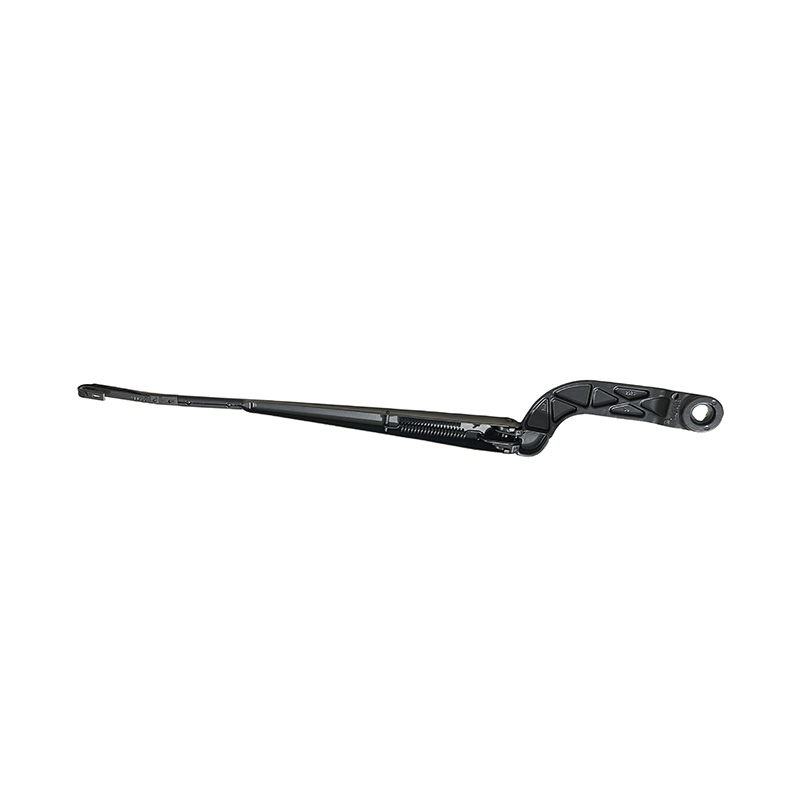
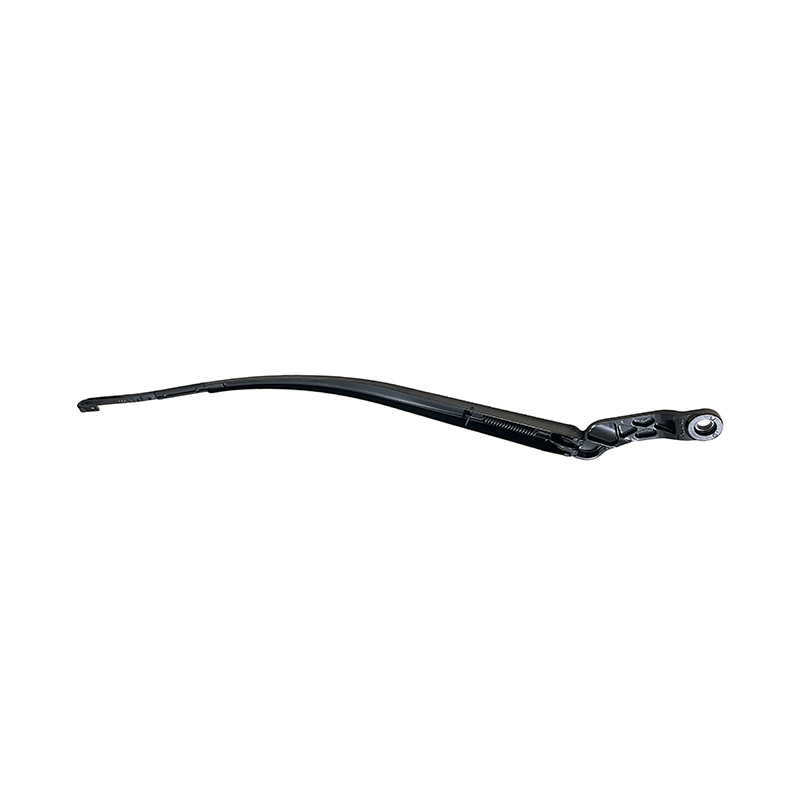
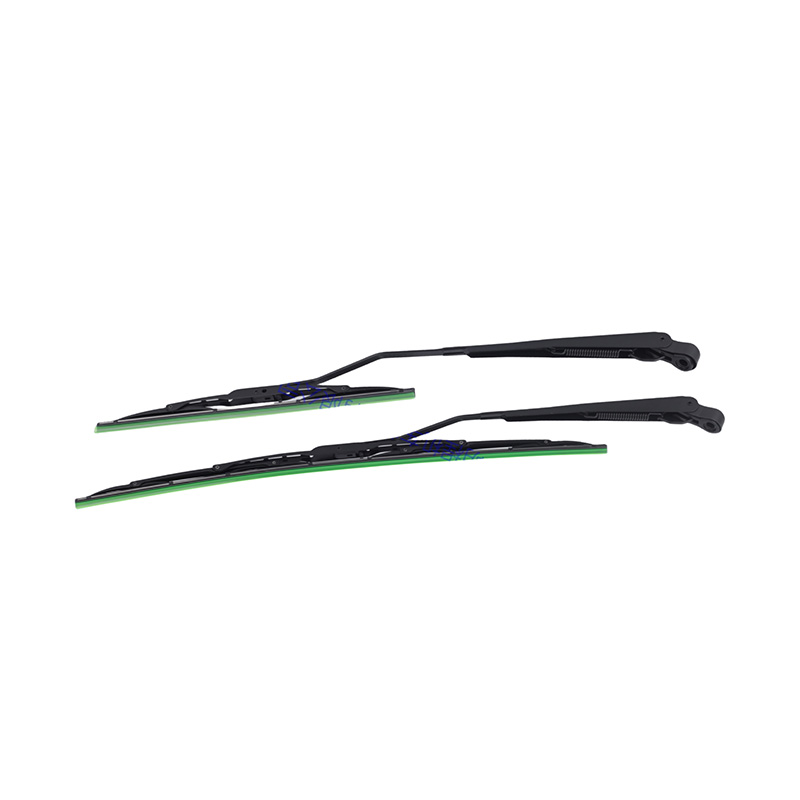
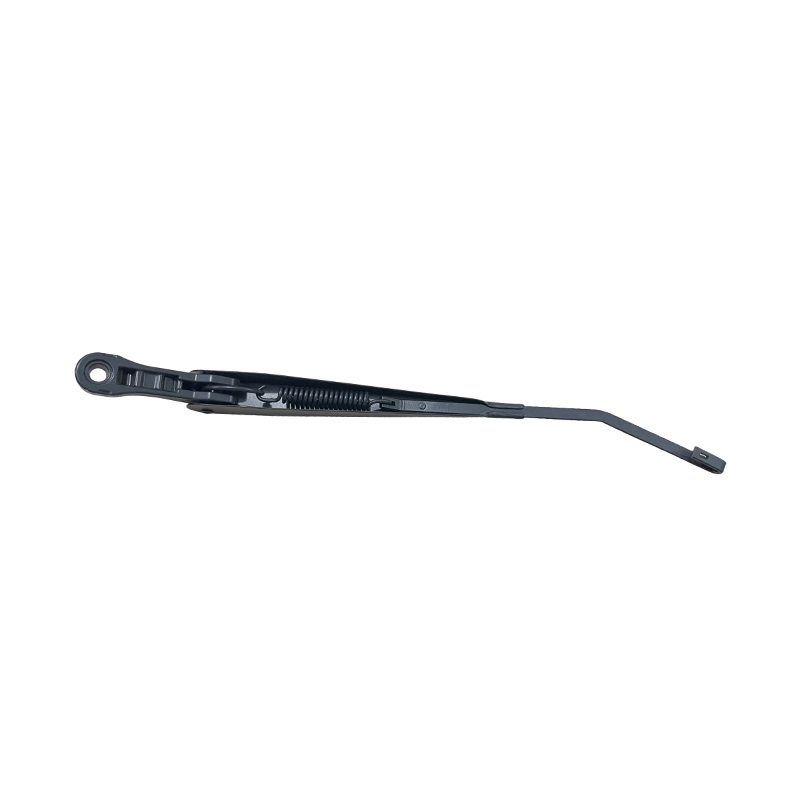
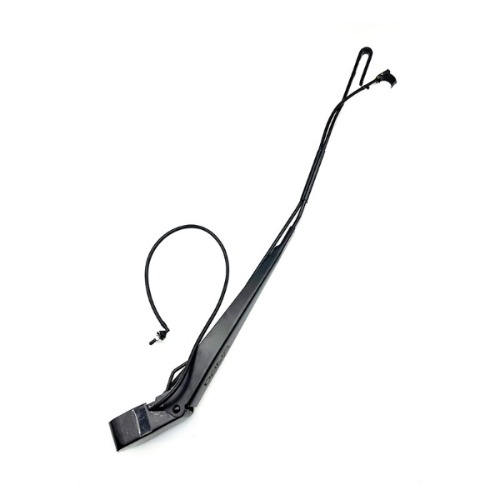
عربىA strange sound from the windshield wipers is easy to ignore at first. It may begin as a faint squeak during a rainy morning, a light rubbing sound when the blade changes direction, or a small click that seems to come from the base of the wiper arm. After a few wiping cycles, the sound may disappear, only to return the next time the wipers are used. Because the wiper blade is the part that touches the windshield, many people assume that worn rubber is responsible. In practice, the sound can come from several parts of the wiping system, and the front car wiper arm deserves attention because it controls the position and movement of the blade while transferring motion from the vehicle's wiper mechanism.
A modern windshield wiper system is relatively compact, but several components have to work together during every wiping cycle. The motor creates the movement, the linkage transfers it, the pivot allows the arm to travel through its operating path, and the arm carries the blade across the windshield. A spring mechanism helps maintain contact between the blade and glass, while the blade itself has to respond to the changing shape of the windshield. When these relationships remain within the intended design, the movement is usually quiet and consistent. Once friction, looseness, contamination, deformation, corrosion, or incorrect installation changes one part of the system, an unfamiliar sound can appear.
The useful part is that the noise itself often provides clues. Instead of immediately replacing the blade or arm, it is better to consider when the sound occurs, whether it changes with the amount of water on the windshield, and whether it appears at a particular point in the wiping cycle. Those observations can help distinguish a surface-related issue from a mechanical one and provide a more practical starting point for inspection.
The Timing Of The Noise Can Tell You Something
Not all wiper sounds behave in the same way. A squeak that occurs while the blade travels across a wet windshield has a different character from a clicking sound that appears precisely when the arm reverses direction. Similarly, a knocking noise coming from the lower mounting area should not be approached in the same way as chatter that follows the blade across the glass.
The timing is useful because the wiper does not experience identical movement throughout the entire cycle. The arm accelerates, travels across the windshield, slows down, changes direction, and begins the return stroke. Each transition places a slightly different mechanical demand on the assembly. If a component has developed play, the change in direction can make that movement easier to hear. If the problem is related to friction between the blade and glass, the sound may continue along a larger part of the wiping path.
| Sound Pattern | What It May Suggest | What To Observe |
|---|---|---|
| Squeaking across the glass | Blade and windshield friction | Glass condition and blade surface |
| Chattering during the sweep | Uneven blade movement | Arm angle and blade contact |
| Clicking at a repeatable point | Movement at a connection | Mounting and pivot areas |
| Knocking during reversal | Mechanical play | Arm, linkage, and pivot |
| Rubbing through part of the cycle | Contact or alignment issue | Blade path and arm position |
| Intermittent tapping | Loose or shifting component | Blade adapter and joints |
These clues are not a substitute for vehicle-specific diagnosis. The same sound can have different causes, particularly when several components have accumulated wear at the same time.
Before Blaming The Arm, Look At The Windshield
The windshield is not a mechanical component, but it has a direct influence on wiper noise. A thin layer of road film, oil, dust, wax residue, insects, or cleaning-product residue can change the friction between the wiping edge and the glass. Because these deposits are not always obvious from inside the vehicle, a driver may assume that a mechanical component has developed a fault when the actual problem begins with the surface being wiped.
Light rain can make this more noticeable. When the windshield is covered with enough water, the blade may move relatively smoothly, while a thin layer of moisture can leave the wiping edge in more direct contact with the glass. If a squeak appears mainly in light rain or when the windshield is nearly dry, cleaning the glass and blade is a sensible first step before investigating the arm.
A simple observation can also help. If the noise changes significantly after the windshield and wiping edge have been cleaned, the glass-blade relationship deserves further attention. If the sound remains unchanged and seems to come from the mounting area or arm itself, the investigation can move toward the mechanical parts.
Why Surface Contamination Can Be Misleading
The problem with contamination is that it can create vibration. That vibration travels through the blade and into the arm, making the entire assembly appear to be involved. A driver sitting behind the steering wheel may hear the noise across the windshield and have little way to determine exactly where it begins.
This is one reason professional diagnosis looks at the behavior of the whole system rather than relying only on the loudest point of the sound.
A New Blade Does Not Automatically Solve The Problem
Replacing a worn wiper blade is common maintenance, but it should not be treated as a universal solution for every wiping noise. Rubber can harden, crack, deform, or collect contamination, and these conditions can certainly affect wiping quality. However, the blade operates under the control of the arm, which determines its position and movement across the windshield.
If a new blade is installed and the same clicking or chattering remains, the arm and its mounting relationship should be considered. The opposite situation can happen as well. A new blade may behave differently from an older, worn blade and make an existing arm alignment issue more noticeable.
The important distinction is between replacing a component because it is clearly worn and replacing it simply because it is easy to change. A more careful inspection can save unnecessary parts replacement and make the actual cause easier to identify.
The Arm Controls More Than Blade Position
From a distance, a wiper arm looks like a simple formed component that connects the blade to the vehicle. Its actual role is more involved. The arm has a defined geometry, a mounting interface, a blade connection, and a spring arrangement, all of which have to work together with the vehicle's windshield and wiping mechanism.
The shape of the arm affects where the blade sits and how it travels. The mounting connection determines how movement from the mechanism reaches the arm. The spring contributes to contact between the blade and glass. The blade connection determines how the wiping edge follows the movement of the arm.
Because of these relationships, a small change in one part can affect the behavior of the complete assembly.
When The Arm Changes Direction, Small Problems Become Easier To Notice
The reversal point is one of the most useful areas to observe when investigating a clicking or knocking sound. The arm reaches the end of its wiping path, the mechanism changes direction, and the blade begins travelling back across the glass. If there is unwanted movement around a joint or connection, this transition can reveal it.
A secure mechanical connection should transfer movement in a controlled way. When play develops, one component may shift slightly before the next component responds. The movement itself may be small, but because it happens repeatedly, the resulting click or knock can become obvious.
This is especially useful when the sound occurs at nearly the same position during every cycle. A repeatable noise does not prove that the arm is faulty, but it gives the technician a specific part of the movement to examine.
The Mounting Area Deserves A Closer Look
The base of the arm connects it to the vehicle's wiping mechanism. Depending on the vehicle design, the connection can involve a shaft, fastening hardware, or another mounting arrangement. If the connection is loose or another component has developed play, the arm may move in a way that produces an audible click.
Vehicle-specific service instructions should be followed when inspecting or removing the arm because the correct procedure depends on the vehicle design.
The Pivot Is Easy To Ignore Until Movement Changes
The pivot allows the arm to move through its intended path. Under normal conditions, it performs its job without attracting attention. Once wear, corrosion, contamination, or looseness develops, the movement can become less controlled.
A worn pivot does not necessarily create a dramatic noise immediately. It may begin with a faint click during direction changes, followed by increasing movement that becomes visible when the arm is observed closely. In some cases, the driver may notice a change in the resting position or a slight difference in the wiping path before a significant sound develops.
This is why regular observation can be useful. A change in behavior often provides more information than the sound alone.
Spring Force Is Part Of The Wiping Relationship
The spring inside a wiper arm contributes to the contact between the blade and windshield. Its behavior needs to correspond with the arm design and the vehicle application. The spring cannot be considered separately from the arm because its effect depends on how the arm is shaped, mounted, and connected to the blade.
If the contact relationship changes, the blade may move differently across the windshield. Chatter can become more noticeable, or the blade may show uneven contact in part of the wiping path.
A spring problem does not always produce a spring-related noise. Instead, it may change the movement of the blade and create a secondary symptom that sounds as though the blade or arm itself is the source.
Why Spring Design Matters During Production
For a manufacturer, spring selection and assembly form part of the product design rather than being an afterthought. The spring needs to work with the arm geometry, mounting arrangement, blade connection, and intended vehicle application.
This is particularly important when different vehicle platforms require different arm shapes or installation positions. There is no single design that can be assumed to suit every application.
A Bent Arm Can Change The Way The Blade Travels
A wiper arm can be deformed without looking dramatically damaged. An accidental impact, incorrect manual handling, a frozen blade, or excessive force during cleaning can change the arm's geometry.
Even a relatively small change can alter how the blade sits against the windshield. The pressure may become uneven, the blade may chatter through part of its movement, or the wiping path may change.
If the arm has been visibly bent, attempting to reshape it by hand is not a dependable repair method. The arm has an intended geometry, and changing it without reference to the vehicle application can introduce another problem.
A damaged component should be assessed according to the relevant vehicle service guidance.
Cold Weather Can Change The Situation
Winter conditions create another possible source of trouble. When a wiper blade freezes against the windshield, the wiping mechanism encounters resistance that is different from normal operation. Activating the system before the blade has released can place unusual loads through the blade, arm, linkage, and motor.
A noise that begins after such an event is worth noting.
The timing does not prove that damage has occurred, but it provides useful background for diagnosis. If the wiper worked normally before the freezing event and started behaving differently afterward, the arm and surrounding mechanism should be included in the inspection.
Corrosion Can Affect Mechanical Behavior
A wiper arm operates in an exposed environment throughout its service life. Rain, humidity, road salt, dust, cleaning chemicals, and temperature changes can all influence its surface and mechanical connections.
Surface corrosion may initially be cosmetic, but corrosion around a spring, pivot, fastener, or mounting interface can become more relevant because these areas are involved in movement or connection.
The effect depends on the component design and the location and condition of the corrosion. For that reason, a visual inspection should pay attention not only to the broad surface of the arm but also to joints, connection areas, and other locations where movement takes place.
The Shape Of A Wiper Arm Is Closely Tied To Vehicle Design
One reason wiper arms should not be selected purely by appearance is that windshield systems vary between vehicles. Windshield curvature, mounting position, sweep area, blade connection, and surrounding body structure all influence the arm design.
Two arms may look similar in photographs while having different mounting interfaces or different bends. If the geometry does not correspond to the intended application, the blade may not follow the windshield correctly.
For aftermarket buyers, distributors, and vehicle parts importers, application information is therefore important when selecting a replacement component.
What Information Helps Identify The Right Arm?
| Information | Purpose |
|---|---|
| Vehicle make and model | Establishes the application |
| Model generation | Helps distinguish different versions |
| Wiper position | Identifies the intended installation location |
| Mounting information | Supports compatibility review |
| Blade connection | Confirms the attachment method |
| Drawing | Provides design reference |
| Physical sample | Helps compare the existing component |
| Material requirement | Supports production planning |
| Surface requirement | Clarifies finishing expectations |
Not every project requires all of these details. The amount of information depends on whether the buyer is sourcing an existing replacement item or developing a new application.
Manufacturing Begins With Understanding The Application
A wiper arm may appear simple once it is finished, but the production process starts with a much broader set of decisions.
The manufacturer needs to understand the application, confirm the geometry, select appropriate materials, determine the forming method, establish joining and assembly requirements, and define the applicable inspection process.
A general production route may include material preparation, stamping or forming, joining operations, surface treatment, spring assembly, final inspection, and packaging. The exact process depends on the product structure.
The important point is that every stage contributes to the final component.
Forming Determines The Shape That The Vehicle Needs
The bends and contours of a wiper arm are part of its functional design.
During stamping and forming, the material is shaped into the required configuration. Process control matters because unwanted deformation can change the arm geometry and therefore influence how the blade sits and moves.
Inspection should consequently consider more than surface appearance. Important geometric features need to correspond with the approved design and customer requirements.
This is particularly relevant when a manufacturer is producing components for different vehicle applications, since a change in vehicle geometry can require a different arm configuration or tooling arrangement.
Surface Treatment Has A Functional Role
The surface finish of a wiper arm is not simply an appearance decision. The component operates outside the vehicle and is exposed to moisture and environmental conditions for long periods.
Surface preparation and finishing therefore need to be selected according to the material, application, production process, and customer specification.
For buyers, it is useful to establish the expected surface treatment before production begins. This avoids leaving an important part of the product definition to assumption.
The Hidden Linkage Can Also Be Responsible
The visible arm is only one part of the mechanism.
Underneath it, the linkage transfers movement from the wiper motor. If the linkage develops abnormal play or another mechanical problem, the resulting movement can be transmitted to the arm.
From the driver's position, the sound may appear to come from the arm because that is the component that is visible and moving in front of the windshield.
This is another reason why diagnosis should follow the movement through the system rather than stopping at the first component that looks suspicious.
The basic relationship can be understood as:
Motor → Linkage → Pivot → Arm → Blade → Windshield
Each stage has a different job, but they all contribute to the final wiping movement.
When The Noise Appears After Maintenance
Timing can be particularly useful when a noise starts shortly after maintenance.
If a blade was replaced immediately before the sound appeared, the blade connection and installation should be reviewed.
If the arm was removed or moved during service, the mounting relationship should be checked according to the vehicle's service procedure.
If the windshield was recently treated or cleaned, surface residue may also be relevant.
This does not mean the latest maintenance operation necessarily caused the problem. It simply gives the inspection a useful starting point.
What Buyers Should Consider When Sourcing Wiper Arms
For B2B buyers, purchasing a wiper arm involves more than finding a component with a similar appearance. The part needs to correspond with the intended vehicle application and customer requirements.
A sourcing discussion may cover vehicle applications, mounting structures, blade interfaces, drawings, samples, materials, surface treatment, packaging, inspection requirements, and expected production quantities.
For a replacement program, application coverage can be especially important because different vehicle generations may use different arm configurations.
For a custom project, the manufacturer may need to review drawings or physical samples before confirming tooling and production requirements.
Existing Product Or Custom Development?
The sourcing process can be quite different depending on the project.
An existing product may already have an established design, application reference, tooling arrangement, and inspection process. A new development may require engineering review, sample preparation, tooling development, testing or approval procedures, and production planning.
Neither approach is inherently the same.
A clear understanding of the project at the beginning helps both the buyer and manufacturer determine what information needs to be exchanged.
Why Samples Can Be Useful
A physical sample can communicate details that are difficult to describe in a short message. The manufacturer can review the shape, mounting area, blade connection, surface condition, and other visible characteristics before discussing production.
Drawings remain valuable because they provide a more precise reference, but a sample can help establish the practical starting point when drawings are not immediately available.
Why Manufacturing Experience Matters During Development
A drawing can define geometry, but manufacturing knowledge helps determine how that geometry can be produced consistently.
Tooling, forming, joining, surface treatment, assembly, and inspection all have to work together.
This is particularly relevant for customized automotive parts.
A manufacturer involved from the development stage can identify production considerations before the project reaches volume manufacturing.
That can make communication between engineering and production teams more straightforward.
How Manufacturing Quality Connects With Noise
Noise is not controlled by one isolated feature.
A manufacturer cannot simply focus on the arm surface and assume that the final wiping behavior will be determined there. Geometry, mounting, spring assembly, blade connection, material, finishing, and production consistency all contribute to how the component functions in its intended application.
This does not mean manufacturing can guarantee that a vehicle will never produce a wiper noise. Real-world conditions vary, and factors such as windshield contamination, blade wear, weather, installation, and vehicle-specific mechanical conditions remain outside the manufacturer's direct control.
The practical manufacturing objective is to produce the component according to its approved design and specified application requirements.
What A Manufacturer Should Understand Before Production
A clear product definition helps reduce uncertainty throughout manufacturing.
The manufacturer needs to know what the component is designed for, how it connects to the vehicle, how the blade attaches, what material and surface requirements apply, and which inspection points are important to the customer.
Once those details are established, engineering and production teams can work from the same reference.
For an existing item, the process may be relatively straightforward. For a new design, it may involve more communication around samples, drawings, tooling, production trials, inspection, and approval.
The exact workflow depends on the application.
What Mingcheng Wiper Brings To The Manufacturing Process
Mingcheng Wiper is involved in the development and manufacturing of automotive wiper components, including wiper arms and wiper blades. The company provides product development and manufacturing support for customer applications, with projects that can involve drawings, samples, tooling, production, and related requirements.
For buyers, the useful part of a manufacturer relationship is the ability to discuss the actual application rather than relying on a generic product description. Vehicle information, drawings, samples, mounting details, blade connections, material expectations, and surface requirements can all help establish a clearer production reference.
This is particularly relevant for customers working with aftermarket replacement programs or application-specific components, where a visually similar product may not necessarily have the same mounting or geometric relationship.
A Noisy Wiper Does Not Always Mean A Failed Component
This is perhaps the most useful point to remember.
A squeak can come from the windshield and blade. A chatter can involve blade condition or arm geometry. A click can come from a mounting connection. A knock can involve the pivot or linkage. A change after cold weather can provide another clue, while corrosion can influence exposed mechanical areas.
The sound should therefore be treated as evidence rather than a final answer.
By paying attention to the conditions surrounding the noise, it becomes easier to decide which part deserves closer inspection.
A Practical Way To Narrow Down The Cause
When a wiper begins making an unfamiliar sound, start with the conditions that are easy to verify. Clean the windshield and wiping edge, then observe the blade and arm through a complete cycle. Note whether the noise appears during the middle of the sweep or at a particular point, especially when the direction changes.
Next, inspect the arm for visible deformation, corrosion, or unusual movement. Look at the mounting area rather than focusing only on the blade. If everything visible appears normal but the noise continues, the pivot, linkage, and other mechanical components may require professional inspection.
This approach is more useful than changing several parts at once because it preserves the clues that can help identify the source.
The Sound Is Often The Beginning Of The Investigation
A noisy wiper can be annoying, but it can also provide useful information about the condition of the wiping system.
The important thing is not to assume that every sound comes from the blade or every click comes from the arm. The windshield, blade, arm, spring, pivot, linkage, and mounting connections all participate in the same movement.
Start with the conditions that are easy to verify. Clean the glass, inspect the blade, observe the wiping cycle, and pay attention to when the sound appears. If the noise is connected with direction changes, unusual arm movement, or a visible mounting issue, the mechanical components deserve closer attention.
For automotive parts buyers, the same system-level thinking is useful during sourcing. A wiper arm should be matched to the vehicle application, mounting structure, blade connection, geometry, material, surface treatment, and production requirements rather than selected from appearance alone.
Ruian Mingcheng Vehicle Parts Co., Ltd. works with automotive wiper component development and manufacturing, including application-based projects and customized production requirements. Clear technical information at the beginning of a project can help connect product design, tooling, manufacturing, inspection, and delivery in a more organized way.
A strange wiper noise may turn out to be nothing more than surface contamination, or it may point toward a mechanical issue that deserves attention. Either way, listening to the timing of the sound and watching how the complete assembly moves can provide a much better starting point than replacing parts based on guesswork.