English
 Português
 Español
 عربى
Clear vision in rain depends on a rubber edge that stays in contact with the glass from one end of the stroke to the other. Two common constructions try to achieve that contact in different ways. One uses an exposed metal frame with several joints that press the rubber against the windshield. The other hides the support inside a continuous profile so that the blade presents a single low shape to the air and to the glass. Understanding those constructions, and the limits of each, helps when a replacement is chosen for a particular vehicle and climate. A Frameless Wiper Blade belongs to the second group and is evaluated by the same practical tests as any other blade: fit, contact, wear and ease of inspection.
Construction of a Frameless Blade
Integrated Support Instead of an Open Frame
In a frameless design the supporting element runs inside the blade body. There is no external lattice of stamped metal arms. The rubber wiping lip is held along its length by that internal spine, and an outer shell or spoiler gives the assembly its profile. When length and curvature match the windshield and the arm, the blade can follow the glass without the discrete pressure points of a traditional frame.
Profile, Airflow and Fitment Basics
The low outline reduces the amount of structure that stands up into the airstream. Some designs add a spoiler shape intended to use airflow to keep the blade seated at speed. Whether that effect appears in practice depends on the specific product and on the vehicle, not on the frameless label alone. Length must match the original equipment specification, and the connector must lock securely to the arm type fitted on the car.
Construction of a Conventional Framed Blade
Frame, Joints and Pressure Points
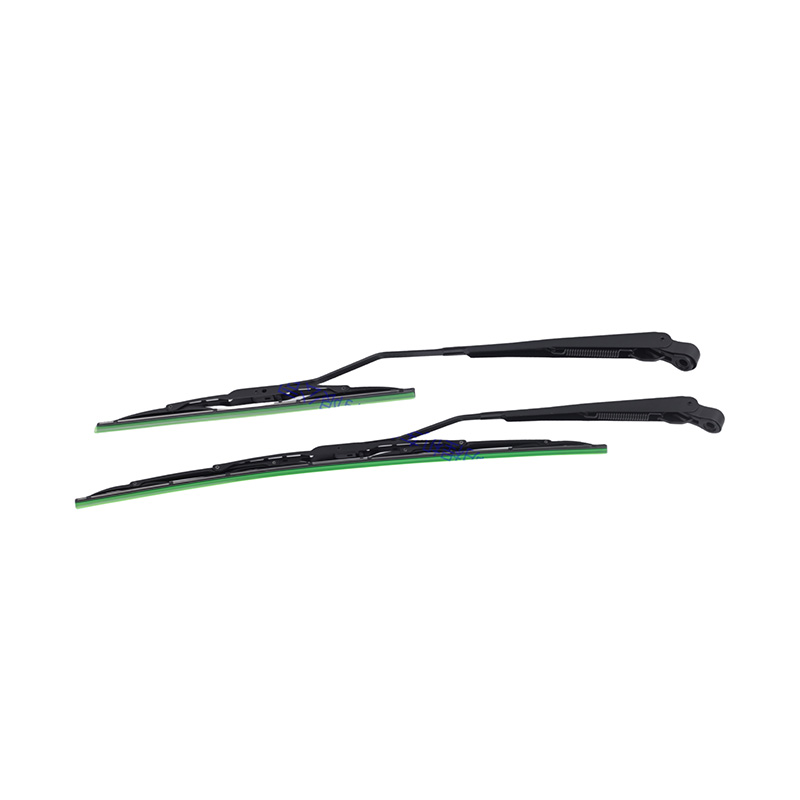
A conventional blade carries the rubber on a metal frame. Linked bridges and claws distribute the force from the wiper arm to several points along the rubber. The frame also provides the attachment to the arm. Geometry of the frame and the condition of its joints therefore influence how evenly the rubber meets the glass and how freely the blade articulates as the arm swings.
Exposed Structure and Service Conditions
The frame and its pivots are visible and accessible. Dirt, road film and ice can collect in the joints. In cold weather frozen joints may prevent the frame from flexing, so that only part of the rubber touches the glass. Performance still depends on rubber quality, correct length, arm pressure and how often the blade is cleaned or replaced.
Where the Two Designs Differ in Use
Shape and Visual Presence on the Arm
Frameless blades present a continuous, usually low silhouette. Conventional blades show the familiar metal frame and multiple joints. The difference is mainly one of appearance and of how dirt and ice interact with the structure; it does not by itself decide wiping quality on every vehicle.
How Pressure Reaches the Rubber
Frameless designs rely on the internal support and on a correct match to windshield curve and arm force. Conventional designs rely on the frame's pressure points and on free movement at each joint. In both cases contact suffers when the blade is the wrong length, the rubber is hardened, the glass is contaminated or the arm pressure is outside the range the blade was designed for. Neither layout guarantees even contact on every screen.
Streaks, Missed Patches and Everyday Variables
Streaking and skipped areas come from worn or damaged rubber, dirty glass, incorrect installation, heavy rain or high speed as much as from frame type. A frameless blade can streak if the lip is torn; a framed blade can wipe cleanly if the rubber and joints are in good order. Results are tied to the specific product and the vehicle, not to the category name.
Behaviour in the Airflow at Road Speed
A smooth outer profile may reduce lift compared with an open frame, depending on spoiler design and test conditions. An exposed frame presents more edges to the wind and may need higher arm force to stay planted. Claims about high-speed behaviour belong in product test data, not in assumptions drawn from appearance.
Inspection and Wear
On a frameless blade the rubber edge, the outer shell and the connector are the main inspection points. On a conventional blade the rubber, the frame members, the joints and the connector are checked. Dirt and ice affect both. Replacement timing follows climate, mileage and the visible state of the rubber, not a fixed calendar that ignores condition.
Fitment and Installation
Both types require the correct length for each side of the vehicle and a connector that matches the arm. Frameless designs are not universal; some arms and some screen curves still specify a framed blade. Application lists and installation instructions remain the authority for compatibility.
Side-by-Side Summary of Design and Service Factors
| Comparison Factor | Frameless Design | Conventional Framed Design |
|---|---|---|
| Structure | Internal support within a continuous profile | Exposed metal frame with linked pressure points |
| Appearance | Low, integrated outline | Visible frame and joints |
| Pressure distribution | Depends on internal spine and correct vehicle fit | Depends on frame geometry and free joint movement |
| Aerodynamic behaviour | Influenced by profile and any spoiler; verify by test | Influenced by open frame and arm force; verify by test |
| Maintenance focus | Rubber, outer structure, connector | Rubber, frame, joints, connector |
| Compatibility | Exact length and connector required | Exact length and mounting style required |
| Selection basis | Vehicle fit, product data, operating conditions | Vehicle fit, frame condition, product data, conditions |
Choosing a Type for a Given Vehicle and Climate
Specifications That Come From the Vehicle
Driver-side and passenger-side lengths are taken from the vehicle documentation or a reliable application guide. Arm type and connector are identified before any blade is ordered. Where the vehicle maker states a preferred design, that guidance is followed.
Conditions of Use
Frequent heavy rain, road salt, strong sunlight or long highway runs affect rubber life and the kind of contamination the blade will see. Suitability is judged against those conditions and against the product's stated range of use. Design category alone does not predict behaviour in every climate.
Quality Signals Beyond the Silhouette
Rubber compound and profile, rigidity of the support, security of the connector and any available wiping tests are compared. Installation instructions and warranty terms, where offered, form part of the same review. Appearance is a weak substitute for that information.
Replacement and Distribution Considerations
Integrated Profile for Compatible Applications
Frameless construction suits vehicles and arm types that are designed for it or that accept it according to the fitment list. The product's profile and connector options are matched to those applications rather than assumed to cover every car in a fleet.
Fitment Data That Reduces Wrong Orders
Confirmed lengths, connector variants and vehicle applications, taken from the supplier's catalogue, help distributors and workshops avoid mismatches. Only verified combinations are quoted; unverified fitment claims are omitted.
Supply Options for Trade Buyers
Ordering quantities, packaging, marking and any agreed customisation are defined in commercial discussion. Target markets, size mix and connector preferences are stated when a quotation is requested so that the offer matches the intended stock profile.
Questions That Recur When Blades Are Compared
Compatibility With Every Vehicle
No blade design fits every arm and every length. Connector and length must match the vehicle; the application list is the reference.
High-Speed Wiping
Airflow management depends on profile, spoiler, arm pressure and tested performance. A frameless outline does not automatically outperform a framed blade at speed on every car.
Signs That Replacement Is Due
Streaks, chatter, noise, nicks in the rubber or a permanent set in the lip indicate that the blade should be changed. Inspection is more reliable than interval alone.
Switching From Framed to Frameless
The switch is possible only when length, connector and any vehicle-maker guidance allow it. Mechanical compatibility is confirmed before the change is made.
Matching Design to Vehicle and Duty
Frameless and conventional blades differ in structure, appearance, inspection points and the way they interact with airflow and dirt. Contact quality, durability and ease of replacement still depend on correct length, connector, rubber condition and the environment in which the vehicle is used. Ruian Mingcheng Vehicle Parts Co., Ltd. manufactures wiper blades for replacement and distribution. Review of blade length, connector type, construction details and application data against the vehicle specification supports selection of a design that fits the arm and the wiping demands of the intended use.